
BARTON FINK (1991)
Directed by the Coen Brothers

Coen Brothers, Comedy, Drama, john-goodman, john-mahoney, john-turturro, jon-polito, judy-davis, michael-lerner, steve-buscemi, tony-shalhoub
Perhaps the preeminent movie about writer’s block and the artistic struggle, Barton Fink is a weird, dark, genre-less movie that is extremely good but borderline unenjoyable in it’s weirdness and darkness. There is something to dislike about nearly every character, none more-so than Barton Fink himself (John Turturro), a wildly self-serious playwright who experiences quick success in 1941 New York before receiving an invitation to write for the Hollywood pictures.
A good 25% of the film consists of Barton pontificating about his artistic suffering and love for the “common man, the working stiff” while cutting off the actual so-called common men around him who are trying to speak.
THE PLOT
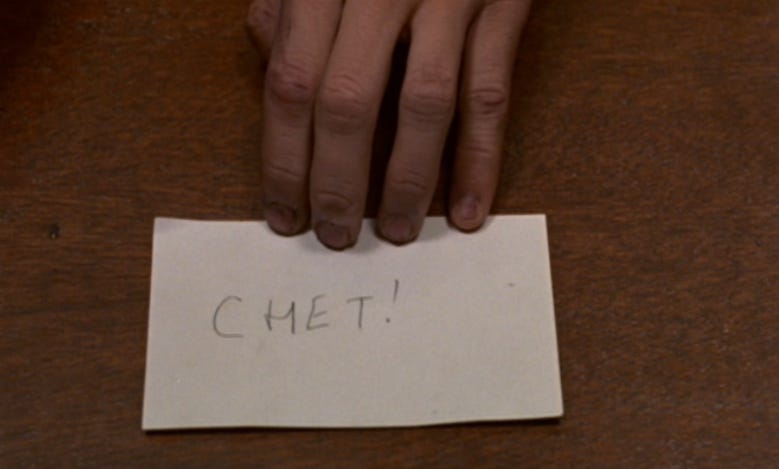
When Fink arrives in Los Angeles, he checks into the Hotel Earle and meets the speed-talking bellhop, CHET! (Steve Buscemi), and his new neighbor, Charlie Meadows (John Goodman), a door-to-door insurance salesman.
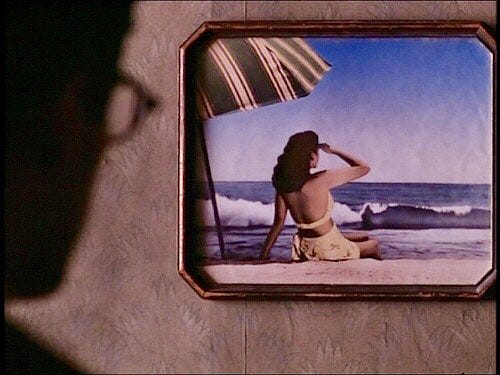
His room is grim. The Coens said they used a lot of muted yellows and greens purposefully to make the setting feel putrid. The wallpaper is peeling, there is an incessantly buzzing mosquito. But hanging on the wall amidst this grime is a single painting of a woman in a bikini sitting on the beach; and gazing into the depths of this image, Barton becomes lost and begins to hear waves crashing on a shore.
He goes into work and meets his new boss, head of Capitol Pictures Jack Lipnick (Michael Lerner), who makes it clear he adores Barton and wants to give him oodles of time and freedom to write a wonderful(ly formulaic) wrestling movie. Barton, of course, pretentiously affected as he is, has never seen a wrestling picture and therefore has no idea how to write one. He goes to his producer, Ben Geisler (Tony Shalhoub), who tells him to find another writer for advice.
All of this leads him to W. P. Mayhew (John Mahoney), the William Faulkner approximation of this movie, a novelist turned screenwriter who struggles with intense bouts of heavy drinking during periods of writer’s block. Mayhew’s secretary-slash-lover Audrey (Judy Davis) is kind and welcoming to Barton, but she’s loyal to Mayhew despite his violence toward her while he is intoxicated.
The middle of the movie is spent whirling between Barton’s inability to draft his wrestling screenplay, his budding friendship with Charlie, and his growing interest in Audrey. It’s when he finally calls her late at night for help with his script that the plot takes its turn.
THE PLOT PART II (SPOILERS)
After spending the night together, Barton wakes to find Audrey slain in his bed, covered in blood. Panicked, he finds Charlie who (mysteriously eagerly) helps him dispose of the body. Knowing publicity of this incident would destroy his career, Barton decides to quietly carry on as normal. Charlie leaves for New York to take care of some “tangling” at the head office of his insurance company, Barton continues to struggle with his writer’s block, and he meets with Lipnick. During this meeting, with no plot yet written, he tells Lipnick he isn’t comfortable discussing works in progress. When Lipnick’s assistant, Lou Breeze (Jon Polito), questions Barton on this, Lipnick becomes infuriated and demands Breeze kiss Barton’s feet as a show of respect before firing him. When he doesn’t do it, Lipnick kisses Barton’s feet himself. This scene is certified gold.
All too often Barton returns to gaze at the painting of the woman on the beach. Soon, he finds his stride and completes a draft of his wrestling picture screenplay. Before he can submit it to the studio, he is interrupted by two L.A.P.D. officers who’ve come in search of Charlie. As it turns out, Charlie’s real name is Karl Mundt — and he’s a serial killer known for cutting off his victims’ heads.
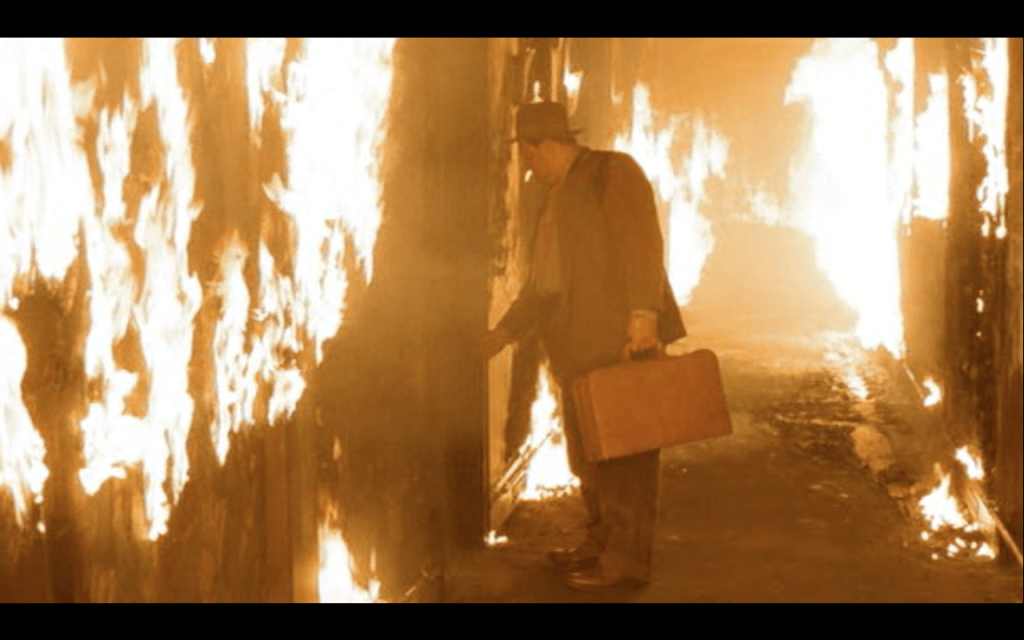
The balance of the film is a lightning fast descent into fiery chaos with literal flames licking every surface while Barton pieces together Charlie’s persona and Charlie claims victory over his pursuers, screaming “Look upon me! I’ll show you the life of the mind!” He frees Barton, who picks up his screenplay and leaves as Charlie unlocks the door to his actively on fire room.
Later, in Lipnick’s office, Barton is told his screenplay — which he calls the best work he’s ever done — is terrible and will never be produced. In fact, nothing he writes will be produced until he “grows up” a bit; he’ll be on retainer with Capitol Pictures, but none of his work will be realized. As Lipnick puts it, Barton needs to be “in town, but out of my sight.”
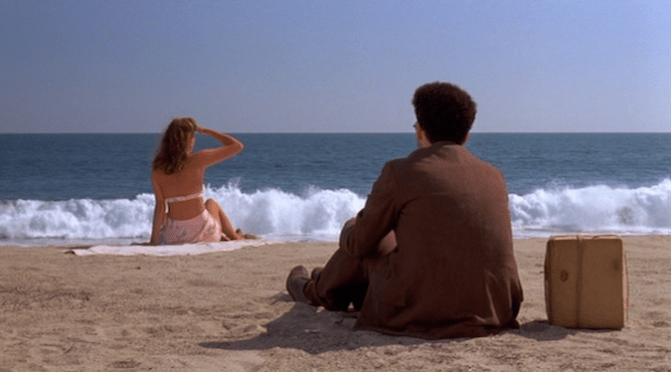
The film ends with Barton at the beach. Looking out of place in his heavy suit and dress shoes, he walks the shore until he comes across a woman, seemingly the same woman from the painting in his hotel room. He sits down on the sand and she does, too, assuming the same position as the woman in the painting. He’s inside the art.
THE ACTORS
The Coens wrote this role for Turturro, so it makes sense that it fits so well. But jeez does it fit so well. You just hate him when he starts proselytizing about his “theater for the people” and when he claims “the hopes and dreams of the common man are as noble as any king’s.” Has there ever been a more pretentious character?! But in that true Coen Brother’s way, you also love him and feel for him.
Goodman, on the other hand, basically walks away with this entire movie on his back. The sweetly bumbling everyman we relate to so deeply at first (because we’re both suffering through Fink looking down his nose at us) turns a corner so sharp we literally walk into murderous Nazi territory. His performance is a slow boil and something to be studied.
Michael Lerner earned the only acting-related Oscar nomination for this movie and it is well-deserved. He is the definition of manic and unpredictable. He says he runs the place because he’s “got horse sense, goddamnit” and because he’s “bigger and meaner and louder” than anyone else in the town. Lipnick is a very “Coen” character. I love him.
THE THEMES
Reality vs. presumed reality, art vs. commerce, art vs. experience, intellectualism vs. lived experience. Any of these dichotomies could be considered the primary theme for Barton Fink. The most glaring is the idea that (at least during Hollywood’s Golden Age, and probably still today) “artistic expression” and the studio concept of “a good picture” are not simpatico. At the end of the movie, Barton has found financial success but lost creative freedom.
As with many Coen Brothers movies, there are so many interesting details that we’re left to interpret on our own. What does it mean for Barton to travel inside that painting? Where were the other occupants of the Hotel Earle? We see their shoes set out for shining every night, but never see them. Were they really there? Was Charlie really there? What was in the box Charlie left behind later claimed was not his?
FINAL THOUGHTS
Most simply, Barton Fink is a movie about the writing process — especially when you’re trying to write from a pedestal, disconnected from real life. As much as Barton wants to connect to his “common man”, he can’t even begin to conceptualize a script for the very type of movie the masses want to see. When Charlie offers up his real-life stories from life on the road, Barton repeatedly cuts him off to lecture him on how interested he is in him.
The concept of the Hotel Earle feeds into this obsession — Barton put himself in these situations. The studio offered him nicer accommodations and he turned them down.
But the story is about much, much more somehow, despite the feeling afterward that actually maybe not much happened during this movie (?). It’s a testament to the Coens that it’s so interesting. This movie doesn’t really follow any rules of a “good story,” and Barton as a protagonist doesn’t fit the mold of a hero we can root for. It starts out with a clear-cut first act and slowly decays into an ending that can be interpreted dozens of ways (none of which can be proven incorrect).
For a film about the quest to find written clarity, Barton Fink is definitely opaque. But that inscrutability (to use a word oft overused by Coen skeptics) is the whole damn point. If you’re asking for my opinion: All hail the brothers Coen.
this movie is good.
My rating: 4.5/5